
One thing to ponder while sharing information about catastrophes such as the Covid-19 outbreak with children: How much is too much to discuss? And how much is too little? Children are sponges, dependent by nature on caregivers for survival as well as their overall psychological and emotional well-being. They absorb whatever is shared with them, processing it unfiltered to varying degrees, … [Read more...]
A modern-day Children’s Crusade

In the year 1212, a crusade of more than 30,000 Christian children led by 12-year-old Stephen of Cloyes and young shepherd Nicholas sought to regain the Holy Land from the Muslims. The children's mission was to "peacefully" convert Muslims while securing Christians' right to the Holy Grail and Jerusalem. They were sent by the priests, backed by parents and the village communities of Northern … [Read more...]
Children at risk: signs, signals, support
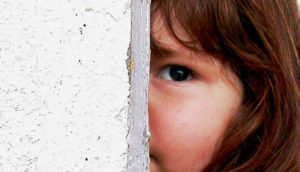
None of us wants our child to suffer from depression. No one wants their child to experience suicidal ideation, but unfortunately, some do. Since 2011, the number of children, teens and young adults committing suicide has doubled. According to the Centers for Disease Control and Prevention, suicide is the third leading cause of death in young people between the ages of 10 and 24, resulting in … [Read more...]
Looking away and looking towards

In "The Emperor's New Clothes," an entire village "looked away" from their ruler, who was parading naked in the street, in order to support the illusion that he was magnificent and refined. The villagers pretended that he wore fine clothes of silk, bolstering his vanity and protecting him from shame to avoid his wrath and their potential punishment. (Miller 1952) Conditioning children to "look … [Read more...]
A two-step approach to childhood pain

It is instinctual to intervene when a child is hurt, physically or emotionally -- to try to stop the young one's pain. Say when a child suffers a cut or a bruise. Or feels the emotional pain of losing a pet. Or reels from injurious comments made by a bully at school. Our inclination is to say something like, "It's OK; it’s not that bad." Or, "Honey you'll be OK -- just shake it off." Or the … [Read more...]