What has occupied so much of my professional life is a form of suffering that remains remarkably easy to overlook: the emotional and psychological suffering of children behind closed doors, across cultures, races, religions and socioeconomic circumstances — not only in the past, but in everyday life.
Children suffer when they are not emotionally “seen,” protected, understood and held. Many of us experienced some version of this shortcoming within our own families. Those of us who became parents must also have the courage to consider how we (often unintentionally) may have passed aspects of our unresolved suffering on to our own children. Exploring this is a difficult but valuable journey.
Too often, we locate the problem solely within the child. Children may receive diagnoses of ADHD, OCD, major depressive disorder, generalized anxiety disorder, panic disorder, oppositional defiant disorder, PTSD, eating disorders or attachment-related difficulties. They may also struggle with addiction, self-harm or suicidal ideation.
These diagnoses may be legitimate from a DSM-5 perspective; treatment may be essential. But a diagnosis tells us primarily how a child is suffering. It does not necessarily tell us why this particular child is suffering in this particular way.
The question that has always interested me most is: What happened to this child — and what did this child desperately need relationally that never happened?
So much childhood suffering has no obvious perpetrator. There may be no single catastrophic event to point toward, only the cumulative absence of being emotionally known, understood in context, protected and comforted. As the saying goes, no two children have exactly the same parents, even within the same immediate family.
That absence can follow us throughout life. Our attention may be transferred to others who “suffer more,” obscuring our own vulnerabilities and the anticipated pain of experiencing them again in isolation — a pain that can feel too difficult to bear.
Alice Miller: The child behind closed doors
This is why Alice Miller’s work has always meant so much to me. She insisted that we look behind the closed doors of apparently respectable families and confront what children may actually experience there.
Her first book appeared in German as “Das Drama des begabten Kindes” (The Drama of the Gifted Child), while its first American edition carried the more aggressive title “Prisoners of Childhood.” The reasons for these differing titles merit careful examination.
For me, “prisoners” captures something essential in Miller’s thinking: the emotional captivity — metaphorically, another form of enslavement — of children who must adapt themselves to the psychological and narcissistic requirements of the adults upon whom their survival depends.
The prison is not constructed from bars. It is constructed through conditional attachment. The child learns what may safely be felt, what must be hidden, what can be spoken, what must remain silent, and which parts of the developing self threaten the attachment upon which life depends.
What looks from the outside like compliance, achievement, giftedness or resilience may conceal an extraordinary psychological accommodation:
I will become what you need me to be so that I do not lose you.
That, for me, is where the original wound often begins.
Abandonment and codependency
Parents inevitably bring their own childhood histories into parenthood. A parent who was never adequately loved, affirmed, emotionally held or permitted to develop a secure sense of self may unconsciously seek through a child something that was missing in his or her own development. This can take apparently opposite forms.
One parent becomes emotionally unavailable or overly focused on achievement, unable to enter the child’s emotional world and its developmental fragility because the child’s needs awaken feelings the parent has spent a lifetime avoiding.
Another becomes overinvolved, anxious, or codependent — doing too much, rescuing too quickly, removing ordinary frustrations or becoming excessively invested in being needed, loved or approved of by the child.
Both approaches interfere with development.
The emotionally absent parent leaves the child alone with feelings too overwhelming to metabolize without help. The codependent parent may unintentionally prevent the child from struggling, separating, tolerating frustration, developing competence or discovering an autonomous self.
The latter is particularly difficult to recognize because excessive involvement can look like extraordinary love. But there is a profoundly important distinction between loving our children and needing our children to love us.
When the parent’s own fears, particularly fears of abandonment, begin to organize parenting, saying no can become difficult. The child’s feelings and independent voice may feel painful, disorienting or threatening. Separation and individuation may be experienced almost as rejection.
The parent may unconsciously become the child within the parent-child relationship, seeking reassurance, gratitude, closeness or approval from the very person whose developmental task is ultimately to separate. Understanding this should not lead us toward blame, but toward reflective accountability.
Jung: The eternal child and the shadow
What I love about Carl Jung is his recognition that the child within us is not someone we simply leave behind.
Later in life, Jung returned to play and a life of imagination along the shores of Lake Zürich. I find something deeply moving in that image: the accomplished psychiatrist and intellectual recognizing that development does not require abandoning the child. Perhaps genuine development requires returning consciously to that child — to what was lost, what remained unheard and what still seeks recognition.
Jung’s concept of the shadow is equally important here.
What we cannot tolerate psychologically does not disappear. Rage, shame, grief, helplessness, envy, terror and longing may be pushed outside awareness, but they continue to seek expression.
We can become extraordinarily perceptive about suffering in the external world while remaining curiously blind to its emotional counterparts within our own histories. We may possess sophisticated language for perpetrators and victims, oppression and injustice, yet have considerably less language for describing emotional subjugation, abandonment, misattunement or neglect within our own families.
This in no way diminishes racism, slavery, persecution or historical atrocity. Quite the opposite. It asks us to expand our capacity to witness suffering rather than selectively locate it.
Sometimes it is psychologically safer to hold another person’s pain than to encounter the devastation of our own. If I continually remind myself that somebody else had it worse, I may never have to say:
This hurt me. I was lonely. I needed something I did not receive. I needed someone to understand me, protect me and remain emotionally present.
But what of our children if this is how we treat ourselves?
Comparison does not necessarily heal suffering. Sometimes it simply makes our own suffering more difficult to recognize.
Miller’s ‘Untouched Key’
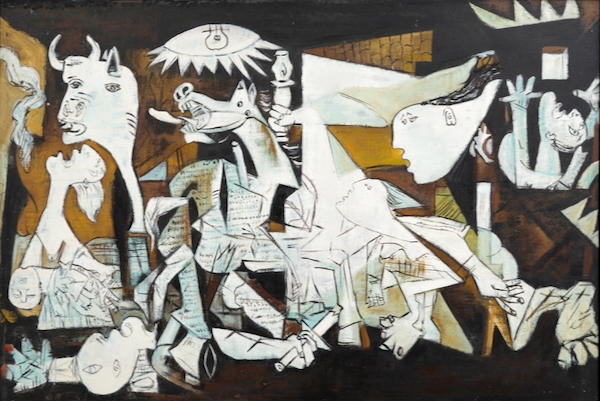
Miller’s 1990 work “The Untouched Key” takes this further by exploring how artists and other creative people may transform experiences that could never originally be thought about, spoken of, or held relationally into extraordinary creative achievement.
Creativity can become expression, adaptation, sanctuary and testimony. Yet the original child may remain outside conscious awareness. The wound can be expressed everywhere and named nowhere.
A person may spend decades giving artistic form to abandonment, loneliness, oppression, injustice, death and grief without consciously recognizing the intimate emotional origins that may also be seeking expression. Picasso’s Guernica (above) offers a compelling example for reflection. Miller’s exploration of the young Pablo gives this great work of art an additional psychological resonance.
This may help explain something about art and its extraordinary emotional power.
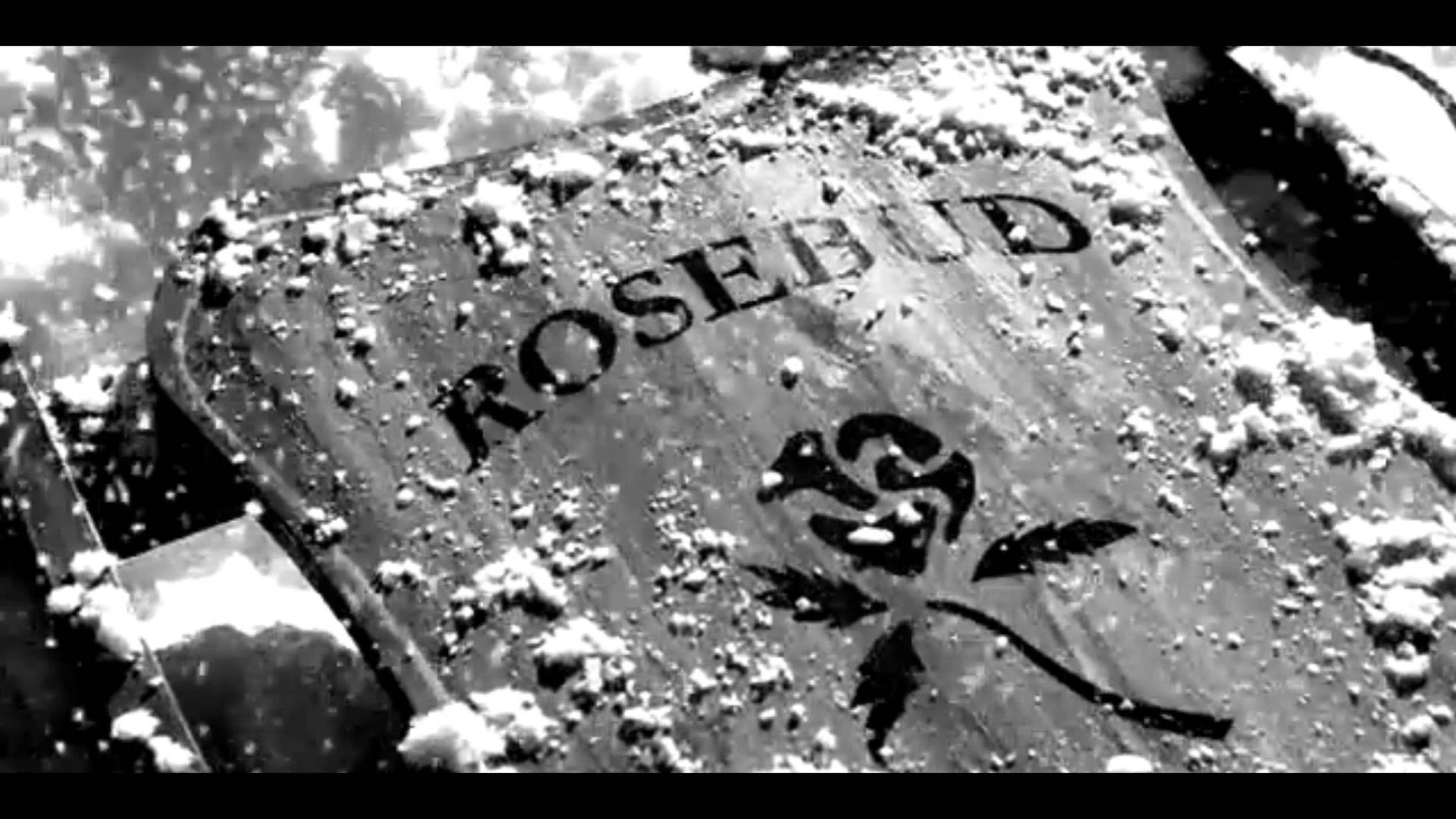
‘Citizen Kane’s’ Rosebud
The film classic “Citizen Kane” offers perhaps one of the most haunting metaphors.
After all the power, wealth, ambition, and spectacle, we return finally to Rosebud — and to the child who lost his relational home.
The adult builds an empire, yet the final emotional symbol belongs not to the powerful man but to the child who was sent away, whose deep and ordinary needs were unseen by his mother. The empire could not retrieve Rosebud.
Achievement, wealth, intellectual brilliance, creativity, caregiving — even devotion to important moral causes — cannot retroactively provide the relational home the child once needed.
The frozen place remains until it can finally be experienced, understood and held within a relationship.
Ken Burns: Memory, loss and the lifelong witness
The prolific PBS filmmaker Ken Burns has created wonderful documentaries and other work. Viewed through a psychological lens, his creative life raises interesting questions about the themes that have occupied him, whether or not he has consciously understood them in those terms.
Burns lost his mother to breast cancer when he was still a boy and has spoken publicly about the profound importance of that loss. For a child, losing a mother is not simply losing a person. It can mean the collapse of an entire emotional world. A child may be surrounded by adults who cannot adequately feel or respond to the enormity of that loss, leaving the child profoundly alone. Burns has alluded to this emotional absence, an experience whose impact can be enormous even when it is minimized.
When I consider Burns’s lifelong engagement with memory, war, suffering, injustice, fractured families, death, survivors and the preservation of stories that might otherwise disappear, I am reminded of Miller. We cannot know that these subjects arose from his childhood experience, and it would be reductive to explain an extraordinary creative life through a single psychological interpretation.
But the possibility is worth considering, and it resonates with much of what I have observed in more than three decades of clinical practice.
The child whose suffering could not adequately be witnessed may become an adult committed to witnessing the suffering of others, perhaps as a displaced form of healing. The child whose story could not yet be spoken may become a keeper of other people’s stories. Both beautiful and heartbreaking.
Perhaps some extraordinary cultural achievements are attempts to construct, on a vast scale, something that was absent on the smallest and most intimate one. We preserve memories. We dignify losses. We identify perpetrators. We insist that suffering must never be forgotten. And yet the original child within us may remain unwitnessed and marginalized.
We can spend a lifetime providing others with the very thing we and our children continue unconsciously to need ourselves.
Stolorow’s relational home for suffering
Dr. Robert Stolorow, my mentor and friend, has also meant so much to me personally and professionally. He is the author of “Trauma and Human Existence.”
Trauma becomes particularly unbearable when it must be endured in emotional isolation.
What human beings require is a relational home — another person capable of entering and understanding our emotional world so that overwhelming experience does not have to be carried entirely alone.
The personal past is never erased. Instead, what happened is finally permitted to exist within a relationship.
I relate to this deeply. I have my own unmet needs and can now see more clearly how they affected me and, at times, those I love, including my own children. I continue to live with this awareness and to grow through it.
First local, then global. First the child, then the world.
Collective suffering matters. Injustice matters enormously. But the external world can also become a place where projection, blame and moral certainty allow us to avoid the more intimate reckoning with what happened behind our own doors.
Insight becomes accountability
For me, the deeper work begins closer to home.
We must compassionately examine what was done to us, but also, and perhaps primarily, what was not provided for us emotionally. And then comes the more difficult task: considering what our own children may have needed from us that our unresolved wounds prevented us from providing.
It is not enough to understand the impact of our parents’ failures. We must become curious about what we ourselves may have inadvertently repeated — through emotional absence, anxiety, control, overinvolvement, codependency, or our own need to be needed.
We must be willing to hear where our children experienced us as absent, intrusive, frightened, controlling, or unable to understand them, and allow their experience to exist alongside our intentions. This is where insight becomes accountability.
And this, I believe, is where intergenerational trauma can finally begin to be interrupted — not through parental perfection, which does not exist, but through recognition, humility, accountability, compassion and repair.
We must be capable of holding both realities simultaneously: the collective wounds of humanity and the intimate wounds of childhood. One does not invalidate the other.
Perhaps this is what it means to attend seriously to Jung’s eternal child: not to sentimentalize childhood, but to remain willing throughout life to return to what was unfinished there.
And perhaps this is also what Miller asks of us: to unlock the door, enter the rooms we have spent our lives avoiding and finally listen to the child who learned long ago that telling the truth might cost them love.
The task is not merely to recognize the suffering of others. It is to become conscious enough that our own unrecognized suffering no longer requires other people — or another generation — to carry it for us. For until the abandoned child is permitted a voice, Rosebud remains forever frozen.