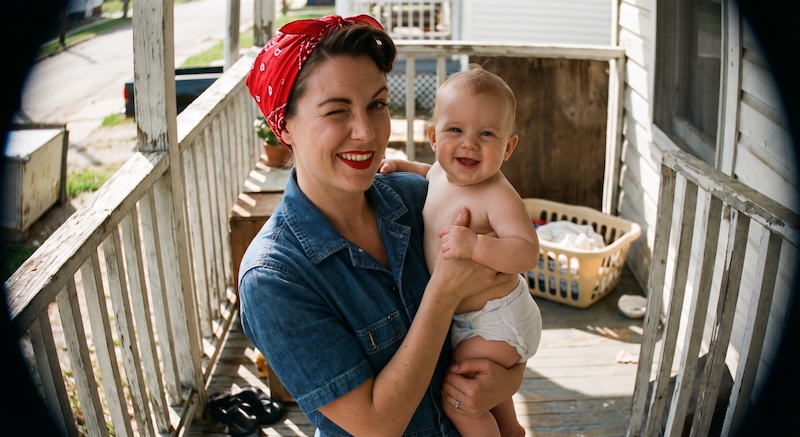
What if there were no epiphanies! What if healing were a slow, steady little train. What if this slow, steady journey to mental health proved good enough.
British pediatrician Donald Winnicott coined the phrase “good-enough mothering” back in the 1950s, urging moms to recognize that what they were providing for their children probably was sufficient. He posited that, in general, children would emerge just fine if good-enough mothering were the benchmark.
While there has been much debate over the decades of the exact meaning of Winnicott’s “good enough,” it is important to remember this recommendation came during the immediate post-World War II era. Mothers were relieved and elated that the terrifying war was over but remained largely unaware of how much they were reeling from unrecognized and unresolved WWII trauma.
With messaging from Winston Churchill to “keep calm and carry on,” new mothers in Britain felt the need stay the course, but they also needed to be less rigorous in their infant care. To give themselves a break. These mothers found themselves in a quandary: How to soothe a baby when they found it hard to soothe themselves. Winnicott perhaps for reasons of encouragement coined his famous good-enough term.
The good-enough mother was a caregiver who provided intense, attentive care early on but gradually reduced this bit of perfection to allow for manageable frustrations, enabling the child to develop resilience, independence and a sense of reality. (Babies do need acute attention in the early months. This develops trust and a sense of security.) This gradual pulling back prevented most infants from developing a fragile and false sense of security.
Fast forward to today: Psychology provides moms with more self-awareness, a focus on what’s commonly known as mindfulness. A healthy emphasis on self-care and self-knowledge. A slowing down to be present for the small things — the beauty of life, the beauty of relationships in which shared authenticity becomes a key component to wellness. A healthful weaning allows mothers a bit of separation. They can live in ordinary spaces, knowing their babies will not only survive brief separations but benefit from a more relaxed mother as a result.
The good news
Going through life, the good-enough concept still rings true. That means being neither too harsh nor too easy on ourselves. Creating a daily balance of compassion, discipline and self-respect for ourselves and others.
Learning about improvement from a baseline of self-love, not self-loathing. Striving to be more from a baseline of already being good enough.
The harsh and impossible world of perfection can lead to isolation and loneliness. Replace those expectations with the good-enough mindset.
Photo illustration: AI via Nano Banana