Empathy is the bedrock of all relational and therapeutic work. It is not simply a skill but a mode of being with another mind — what the psychoanalyst Heinz Kohut called vicarious introspection. The capacity to feel into the emotional life of another so that the self can be known, mirrored and stabilized. Without empathy, no self can develop with coherence, and no therapy can heal.
Yet empathy is not only a healing force. It is also a point of exposure.
To be emotionally open is to be susceptible — not merely to care, but also to influence. The same permeability that allows intimacy also allows intrusion. History makes this both disquieting and uncomfortably clear.
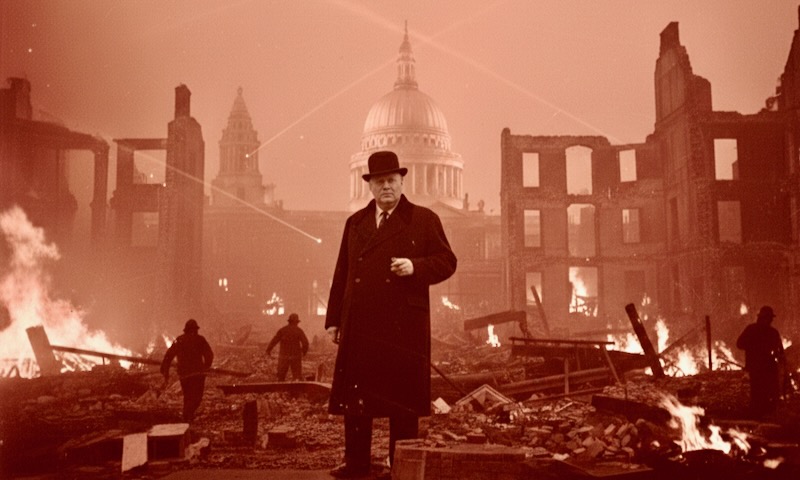
During World War II, German military psychologists understood something deeply intersubjective: Terror does not reside in explosives alone. It lives in anticipation, in the mind’s ability to imagine, to feel, to resonate with threat before impact occurs. The whistle of the falling bomb became a psychological weapon. The sound itself activated the British nervous system, inducing panic before any physical destruction took place. The aim was not simply to destroy buildings, but to fracture morale — to collapse the emotional field in which meaning, courage and cohesion were held.
From an intersubjective perspective, as Dr. Robert D Stolorow would frame it, this was an assault on the emotional context of a people. Trauma does not emerge merely from pain; it emerges when pain cannot find a contextually responsive stabilizing other. The Blitz, the repetitive and relentless bombing in London perpetrated by German forces during 1942, sought to make the British public feel emotionally alone inside their terror. The goal was to sever the power of any relational field that allows fear to be borne and held.
Donald Winnicott, the acclaimed British child psychologist and pediatrician, would describe this as an attempt to shatter the “holding” environment. Psychological stability depends on a world that is predictable enough to experience a reality that has meaning and makes sense. When a threat becomes omnipresent yet cannot be contained, the psyche moves toward primitive anxiety. This leads toward chaos and disorganization rather than integration, unless a cohesive collective presence overrides such intentions.
Masud Khan, writing of cumulative trauma, would see the Blitz not as one catastrophic blow but as a thousand anticipatory wounds: each siren, each whistle, each night of waiting gradually gaining momentum and power, eroding psychic continuity. This was warfare aimed at the nervous system.
Yet it failed.
Britain did not collapse into psychological chaos. Why? Because empathy alone does not determine vulnerability. The absence of emotional and psychological containment does. It was here where the British prevailed.
Under Winston Churchill’s leadership, fear was not denied, it was acknowledged and held. Heinz Kohut would recognize this as collective self-object function: a leader who mirrored distress without amplifying it; who named danger without surrendering to despair; who infused suffering with coherence and meaning. Stolorow would say that pain was shared, borne together rather than abandoned with pain in isolation. Winnicott would say that a holding environment remained intact. Khan would say that trauma was metabolized rather than internalized absent of a protective shield.
The Germans erred in believing emotional sensitivity equaled weakness. In fact, it meant capacity expansion, a shared common experience innate to human existence.
Empathy did not cause the British population to collapse; it allowed them to bond, share fear and transform terror into resolve. The same emotional openness that could have been exploited became the channel through which resilience flowed.
This holds a profound lesson for psychotherapy.
Empathy opens the psyche. It makes healing possible yet also exploitation. The patient who feels most deeply is often the one most vulnerable to being destabilized by misattunement, intrusion or misuse of power. Trauma is not created by feeling too much. It is created when feeling is left alone in isolation, misunderstood, or intentionally or not turned or used against the self.
Ethical therapy does not protect patients by dampening empathy. It protects them by holding it within consistency, attunement and contextual comprehension. Empathy without integrity destabilizes. Empathy held within a reliable relational field heals.
The history of the Blitz reminds us that psychological life is not governed by vulnerability alone, but by whether vulnerability is met by something relationally resilient enough to contain it.
This is as true today in a therapy room and in life, as it was in wartime London.
Photo illustration: AI via Gemini