‘I can see how you would feel that way’
How often do we really listen to the ones we love? And when we do, why are we so ready to defend and justify our behaviors that our loved ones say are harmful?
What if just for a moment, we take that essential beat and then turn to healing thoughts such as these:
- If this person didn’t care about me he would not be hurt by me.
- I impact this person, therefore I must matter a lot to her.
- He needs me to care about his feelings. He wants to connect with me.
- She has expressed her pain because she cares about me.
- I matter to him, therefore he matters to me.
- I love this person and I can now hear her pain because I have given myself this perspective: Not only is this person important to me, but I see just how important I am to her.
- I have been afraid that I am not important — not worth loving — and so I have conditioned myself to be emotionally closed. In doing so I not only rob myself of being truly loved, but also of the healthful act of letting someone love me.
- By allowing the ones I care about to express their pain, anger and loss, I now realize that I am needed, I am wanted, I am loved.
- I can bear so much more with this new awareness.
10 ways to beat panic attacks
1. Remember that although your feelings and symptoms can be very frightening, they are not dangerous or harmful.
2. Understand that what you are experiencing is an exaggeration of your normal bodily reactions to stress.
3. Do not fight your feelings or try to wish them away. The more you face your fears, the less intense they will become.
4. Do not add to your panic by thinking about what “might” happen. If you find yourself thinking, “What if?” then try telling yourself, “So what!”
5. Stay in the present. Notice what is really happening to you, compared to what you think “might” happen.
6. Label your fear level from 0-10 and watch it go up and down. Notice that the fear level does not stay high for long.
7. When you find yourself thinking about fear, change your primary thought. Focus on a simple manageable task and carry it out.
8. Notice that when you stop adding frightening thoughts, your fear begins to fade.
9. When the fear comes, accept it. Wait. Don’t run away. Give it time to pass. Learn to expect it.
10. Once you’ve applied some of these concepts, be proud of yourself for the progress you’ve made. Think about how good it will feel when you succeed in taming your panic and fear.
Types of phobias:
- Fear of death or severe pain
- Fear of losing control
- Fear of restraint, or confinement
- Fear of being abandoned
- Fear of the strange or unknown.
Did you find this post helpful? Follow Dr. Katrina on Twitter or sign up to get the latest psychotherapy blog posts via email.
The subtle art of manipulation
Manipulation gets a bad rap. It’s not always a bad thing.
Sometimes manipulation can change a situation that might be headed in a harmful direction into a healing one.
For example, Sarah, a teenager, is getting ready to go on her first date. She comes down the stairs and asks her parents if she looks OK. She is nervous, unsure of her appearance and could easily collapse into shame.
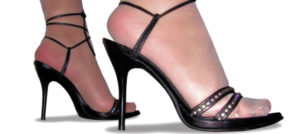
Sarah’s father and mother at first stare at their child wide-eyed as they notice the length of her skirt and the height of her heels. They want to blurt out, “Good Lord, you look like a call girl! Get upstairs and change right this minute.”
Instead, mom taps dad’s leg under the table, indicating she’ll handle this one.
Mom takes that essential beat, pauses and smiles. She remembers herself as a teenager, insecure and fearful of being rejected. She says to her child in a loving tone, “Honey, you look beautiful; can I make one suggestion?”
Her eager child, seeking approval and fearful of rejection, is receptive to her mother, who has not judged her negatively.
“Sure, Mom,” Sarah replies.
Using the art of manipulation, her mother says, “I like that skirt, but you know the blue one with the plaid print you just bought a couple of weeks ago? Well it matches those shoes just great. Had you thought of that?” It’s also a longer, tailored plaid skirt.)
The daughter looks down and notices the mismatch without shame. Grateful for the loving suggestion she goes back upstairs and changes, feeling both loved and supported. Sarah has a healthy sense of pride within.
Manipulation? You bettcha. Was it a bad thing? No way.
The inevitable appointment with the self
Dr. Katrina Wood looks at the notion of midlife crisis. Does everyone have one? What can be done to avoid a midlife crisis and transition into midlife with dignity, curiosity, excitement and serenity. The best years are yet to come!
- Listen to the complete audio of this psychotherapy advice show.
- View more psychotherapy videos on the Dr. Katrina Wood channel on YouTube.
Opening a dialog between parents, grown kids
Do parents understand the depth of grown children’s anger over the past? How can they encourage their adult offspring to express their feelings — and move toward healing?
Dr. Katrina and guest Dr. Stephen Feldman, MFT, continue to probe parent-child estrangement in this video from the Dr. Katrina Wood video channel.