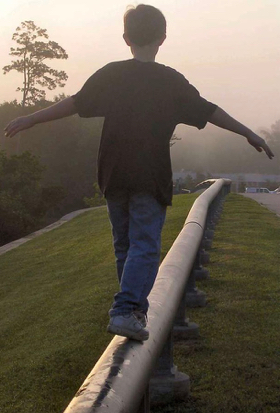
In a wonderful world we have balance.
We achieve balance with the presence of two structures.
1. The outer world: The love of our family, the value of our jobs, our responsibilities, our important relationships and our not-so-important relationships. The outward important manifestation of our daily lives.
2. The inner world, which possesses and reflects our creative lives. Also our dreams, our visions, hopes, fears — all imbued with a deep longing to relate to another and share this inner world. During childhood, as the inner world develops, it shapes our way of thinking and feeling about other people.
It’s all about how much — or how little — abuse and trauma, or love and nurturing we experienced from childhood caregivers. Our perceptions, expectations and limits of relationships are developed via the lens through which our child viewed life.
This does not mean that early childhood trauma necessarily prevents a happy, creative life — but it can inhibit our ability to relate in healthy ways as the years go by.
Photo: Stacy Brumley